
Value Props: Create a Product People Will Actually Buy
Michael Skok—founding partner at Underscore VC—unpacks startup essentials: honing a killer value proposition by targeting the right customer, validating real problems, and assessing if your idea deserves pursuit. Speaker: Michael Skok | Podcast: Harvard Innovation Labs | Views as of post date: > 2,800,000
PRODUCTS
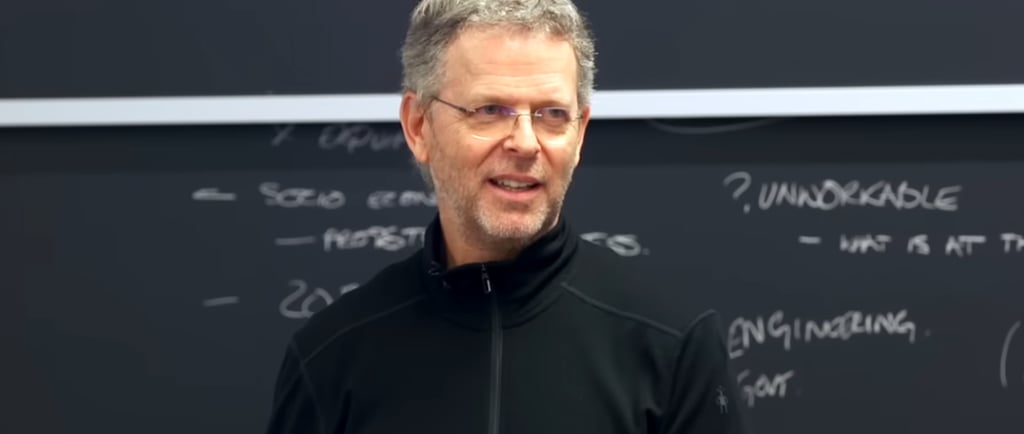

About this video
Michael Skok is a visionary serial entrepreneur and Founding Partner Emeritus at Underscore VC, who built and exited ventures like AlphaBlox (to IBM), pioneered cloud/SaaS investments, and mentors founders through Harvard's Startup Secrets series.
Most startups don’t fail because of execution—they fail because they’re solving weak, unclear, or low-priority problems. If your value proposition isn’t tied to a specific user with a painful, urgent need—and strong enough to justify switching—you don’t have a business yet. The real work is not building, but proving that someone must care.
Full Video at the end of page
Core Insight (Plain English)
Stop thinking in terms of “ideas.”
Start with a specific person, a real problem they feel, and whether they care enough to act.
If the problem isn’t painful, urgent, and clearly defined—you’re guessing, not building a business.
7 Practical Lessons
Define a narrow customer segment first—never “everyone.”
If you’re targeting everyone, you’ll reach no one. In SEA markets, this is critical—diverse income levels and behaviours mean segmentation is survival, not strategy.Start with the user, not the payer—but solve both.
If users don’t care, no one pays. But if someone else pays (e.g. government, enterprise), you need two value propositions—one for usage, one for funding.Validate problems through direct conversations, not assumptions.
Don’t pitch. Ask: “Do you have this problem?”
In Southeast Asia, informal conversations (WhatsApp, in-person, community groups) are often the fastest validation channels.Use the “4U filter” to test problem strength:
Unworkable (serious consequences)
Unavoidable (must deal with it)
Urgent (top priority now)
Under served (no good solution today)
If your problem doesn’t hit at least 2–3 of these, it’s weak.
Don’t compete on “cheaper, faster, better”—it’s a losing game.
Large players will outspend you. You need something different, not just improved (e.g. new model, new access, new behaviour).Your product must be at least 10x better (or feel like it).
People don’t change behaviour for marginal gains. Especially in SEA SMEs, switching costs (training, trust, habit) are high.Actively uncover why customers will NOT buy.
This is more valuable than why they would.
Ask directly: “Why wouldn’t you use this?”
This reveals hidden friction—trust, cost, complexity, inertia.
Summary & Reflections
This framework is strong for early-stage clarity, but it assumes customers act purely on problem severity and rational evaluation.
In practice, many SME decisions are shaped by trust, habit, and perceived risk, not just how painful a problem is. A “better” solution may still be ignored if it feels unfamiliar or risky.
There is also a bias toward solving urgent, high-friction problems, which can overlook businesses built on gradual behavior change or aspiration—but those require more capital and time to work.
Regional Consideration (Southeast Asia):
Adoption is often trust-driven, not problem-driven (e.g. people stick to known vendors even with worse solutions)
Many markets have dual stakeholders (user vs payer), especially in education, logistics, and B2B services
Switching costs are higher due to fragmented systems, informal processes, and low standardisation
Overall, the framework is most reliable for resource-constrained operators who need fast validation, but should be applied with awareness of real-world buying behaviour.
Who should watch the full video
Early-stage founders validating ideas
SME owners launching new products/services
Product and marketing leads refining positioning
Anyone struggling with “we have an idea, but no traction”
Decision Rating
Decision Usefulness: ★★★★★ (5/5)
Highly actionable. Directly helps operators decide whether to pursue, pivot, or kill an idea early—before wasting resources.
Practical Applicability: ★★★★☆ (4/5)
Very usable frameworks (4U, gain-pain, segmentation), especially for SMEs. Slight limitation: requires disciplined customer interviews, which many operators skip.
Strategic Value: ★★★★☆ (4/5)
Strong for early-stage direction and positioning. Less depth on scaling, distribution, or competitive dynamics beyond initial validation.
Until next time,
The SME Signal editorial Team

Contact
Questions? Reach out anytime.
hello@smesignal.com
© 2026. All rights reserved.