
The psychology of digital marketing
In conversation, Rory Sutherland explores behavioral economics and its implications for marketing, product design, customer experience, and business strategy. The talk challenges the assumption that customers make decisions rationally, arguing instead that perception often shapes behaviour more powerfully than objective reality. Speaker: Rory Sutherland | Podcast: GDS Group | Views as of post date: > 865,000
MARKETING
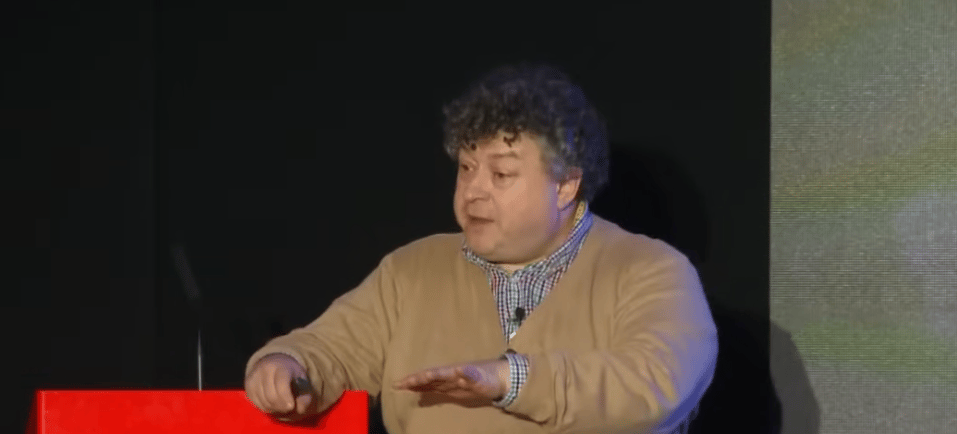

About this video
Rory Sutherland is a highly successful British advertising leader and behavioural science pioneer, long-time Vice Chairman of global agency Ogilvy, bestselling author, and globally sought-after keynote speaker and consultant.
Most businesses spend too much time improving objective reality (faster, cheaper, more efficient) and too little time improving how customers experience reality. The speaker's central argument is that customer decisions are driven less by logic and more by perception, context, trust, uncertainty reduction, and psychological cues.
For operators, this creates a significant opportunity: many expensive operational problems can be solved more cheaply through behavioral design than through engineering, process redesign, or price cuts. The competitive advantage often comes from understanding how people actually behave rather than how spreadsheets assume they behave.
Full Video at the end of page
Core Insight (Plain English)
Most businesses optimise the thing.
The best businesses optimise how people experience the thing.
Customers do not buy based on objective reality alone. They buy based on what feels safer, easier, more trustworthy, more understandable, less risky, or more rewarding.
When operators focus only on efficiency, pricing, features, and specifications, they often miss the bigger opportunity: changing perception can create more value than changing the product itself.
7 Practical Lessons
1. Solve the emotional problem, not the stated problem.
Customers often complain about symptoms rather than causes.
For example, people may ask for tighter delivery windows when what they actually hate is uncertainty. A simple "we'll text you 45 minutes before arrival" may improve satisfaction more than expensive scheduling systems.
2. Reduce uncertainty before reducing cost.
Customers frequently value certainty more than speed.
Real-time updates, progress indicators, queue visibility, order tracking, and proactive communication often generate more satisfaction than costly operational upgrades.
This is particularly relevant in Southeast Asia where delivery reliability and service transparency strongly influence trust.
3. Test psychological solutions before capital expenditure.
Before spending millions on infrastructure, ask whether a behavioural solution exists.
Examples:
Better framing
Better communication
Better defaults
Better visibility
Better social proof
Many customer frustrations are perception problems disguised as operational problems.
4. Compete on framing, not just features.
A superior product can fail if customers cannot understand why it exists.
How you name, position, explain, and contextualize an offering can matter as much as the offering itself.
Operators should review product descriptions, pricing presentation, menus, websites, and sales scripts with this in mind.
5. Brands reduce risk, not just create awareness.
Customers often buy known brands because they fear making a bad decision.
Trust, reputation, guarantees, consistency, and visible commitment can justify premium pricing even when product differences are small.
For SMEs, this means investing in credibility signals may produce higher returns than feature expansion.
6. Stop assuming customers choose purely on price.
People compare options using context.
A product can become more attractive because:
It appears popular
It looks premium
It reduces risk
It signals quality
It feels easier to justify
Competing only through discounts can trap businesses in a race to the bottom.
7. Design for repeat relationships.
Customers, suppliers, employees, and partners behave differently when they believe the relationship will continue.
Small acts of generosity, flexibility, and trust-building often generate long-term value that cannot be captured in a quarterly spreadsheet.
This matters especially in Southeast Asian markets where relationship-based business remains important.
Summary & Reflections
The framework is powerful because it highlights a blind spot in many organizations: customers are human, not economic models.
However, psychological improvements are not a substitute for operational excellence. Poor products, poor service, and poor execution cannot be permanently disguised through behavioral techniques.
There is also a risk of becoming overly focused on "hacks" and neglecting genuine value creation. The strongest businesses usually combine both:
Strong operational foundations
Strong behavioral understanding
Regional Consideration (Southeast Asia)
Trust often remains a major purchase factor in fragmented markets.
Social proof, reputation, referrals, and visible credibility signals can carry disproportionate weight.
Behavioral improvements may be especially valuable for SMEs that cannot outspend larger competitors on infrastructure.
Who should watch the full video
SME founders
Marketing leaders
Product managers
Customer experience teams
Service business operators
Retail and e-commerce owners
Business strategists
Innovation and growth teams
Particularly useful for operators trying to improve customer satisfaction without large increases in spending.
Decision Rating
Decision Usefulness: ★★★★★
This is highly valuable for SME operators because it provides a practical framework for finding lower-cost ways to improve customer satisfaction, conversion, and loyalty without requiring major capital investment.
Customer Insight Value: ★★★★★
The entire discussion focuses on how customers actually make decisions rather than how businesses assume they make decisions. It offers numerous examples that can be directly applied to sales, service, pricing, and product positioning.
Strategic Value: ★★★★☆
The ideas can reshape how operators think about competition, differentiation, and value creation. However, the concepts require careful interpretation and testing rather than blind adoption, which slightly reduces immediate strategic applicability.
Until next time,
The SME Signal editorial Team

Contact
Questions? Reach out anytime.
hello@smesignal.com
© 2026. All rights reserved.