
The Jamie Dimon Interview: How JP Morgan Became an $800 Billion Bank
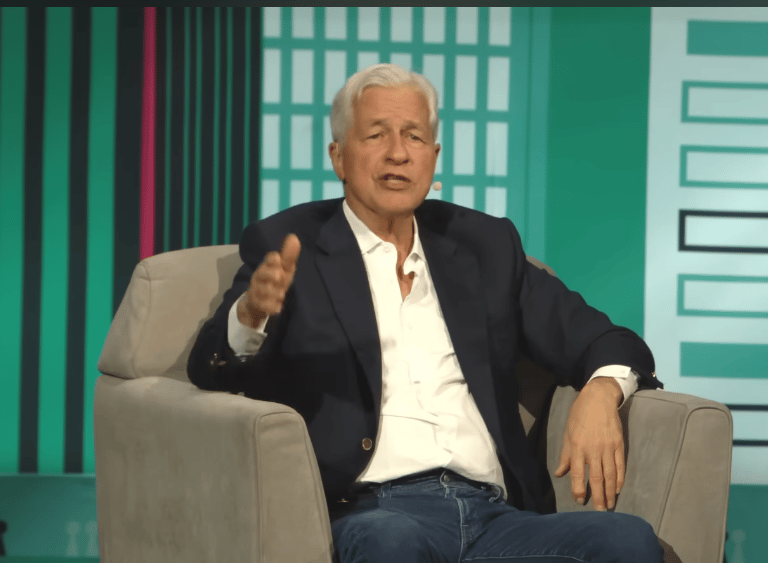
Acquired’s live interview with Jamie Dimon examines the growth of JPMorgan Chase and the operating principles that have shaped its expansion and survival through repeated financial crises. Speaker: Jamie Dimon | Podcast: Acquired | Views as of post date: > 231,000
KNOWLEDGE

About this video
Jamie Dimon is one of the most powerful figures in global finance, serving as chairman and CEO of JPMorgan Chase and steering the bank through major economic cycles with a reputation for sharp strategy and disciplined leadership.
One of the clearest signals from this discussion is that long-term institutional resilience may now matter more than short-term optimization. Jamie Dimon’s operating philosophy was not built around maximizing upside during boom years — it was built around surviving volatility, preserving trust, and being able to act when competitors fail.
For SME operators, the implication is important: the next decade may increasingly reward businesses that prioritize durability, liquidity, operational discipline, and customer trust over aggressive expansion or financial engineering. The competitive advantage may not be “growing fastest,” but “remaining stable while others break.”
Full Video at the end of page
Core Insight (Plain English)
The core shift is this:
Businesses are increasingly being judged not just by how fast they grow, but by how resilient they are under stress.
Jamie Dimon repeatedly describes running JP Morgan around a “fortress balance sheet” philosophy — meaning the company is designed to survive extreme downside scenarios, even if that means earning slightly less during boom periods.
That mindset shaped:
how risk was measured
how incentives were designed
how acquisitions were approached
how liquidity was managed
how aggressively the company pursued growth
The broader signal is that resilience itself is becoming a strategic asset.
For years, many industries optimized for:
efficiency
leverage
rapid scaling
short-term returns
“lean” operations
But repeated shocks — financial crises, supply chain failures, cyber threats, rate shocks, platform dependence, and geopolitical instability — are changing the equation.
The assumption being challenged: “Maximum efficiency creates the strongest business.”
Increasingly, operators may discover: “The businesses that survive disruption gain disproportionate long-term advantage.”
What this means for operators
1. Liquidity and optionality may become more valuable than maximising margins
Dimon repeatedly emphasised maintaining excess liquidity and conservative positioning even when competitors pursued higher short-term returns.
For SMEs, this may translate into:
stronger cash reserves
lower debt dependence
avoiding over-expansion
preserving flexibility during uncertain periods
The practical implication is that survival capacity can become offensive capability during downturns.
2. Incentive systems may quietly create operational risk
A major theme was how compensation structures encouraged excessive risk-taking in banking before 2008.
SMEs should examine:
sales incentives
commission structures
performance bonuses
growth KPIs
Poorly designed incentives can create:
bad customer behaviour
weak quality control
compliance shortcuts
unsustainable client acquisition
The risk is often not the employee — it is the system rewarding the wrong behaviour.
3. Operational integration matters more than acquisition headlines
Dimon stressed that many mergers fail because systems, culture, and execution are poorly integrated. This applies beyond banking.
SMEs pursuing:
acquisitions
partnerships
franchise expansion
multi-location growth
digital transformation
should pay closer attention to:
process integration
systems compatibility
data consistency
cultural alignment
operational simplification
Growth complexity can silently destroy execution quality.
4. Customer trust is becoming a balance-sheet issue
One of the strongest themes was that financial institutions fail when trust disappears. This increasingly applies across industries.
Businesses dependent on:
subscriptions
marketplaces
digital platforms
recurring revenue
online reputation
may discover that trust deterioration creates rapid business instability.
This includes:
cyber-security failures
fulfilment inconsistency
refund disputes
hidden pricing
poor service recovery
Trust is becoming infrastructure.
5. Long-term investment discipline may outperform “stop-start” management
Dimon maintained that investing through cycles rather than cutting aggressively during downturns.
SMEs often react to uncertainty by:
stopping marketing
freezing capability development
reducing customer support
pausing technology investments
But businesses that maintain strategic investment during weak periods may emerge with stronger positioning when markets recover.
The signal is not “spend aggressively.”
The signal is:
Maintain continuity in capabilities that compound over time.
6. Cybersecurity is no longer just an enterprise concern
Dimon identified cyber risk as one of the biggest systemic threats ahead.
For SMEs, cyber exposure increasingly affects:
customer trust
insurance costs
vendor relationships
operational continuity
payment systems
Smaller firms are often more vulnerable because:
security practices are fragmented
staff training is inconsistent
vendors create hidden exposure
The issue is not only hacking — it is business interruption.
Practical watchpoints
Operators should monitor:
Whether customers increasingly prioritize reliability over novelty
Especially in finance, logistics, SaaS, healthcare, and B2B services
Rising pressure on companies carrying high leverage or weak cash positions
Particularly if interest rates remain structurally higher
Cybersecurity becoming a commercial requirement
Clients may increasingly require proof of security practices
Consolidation opportunities during market stress
Stronger firms may acquire distressed competitors, customers, or talent
The hidden operational cost of complexity
Multiple systems, fragmented tools, duplicated workflows, and unclear accountability can become major scaling liabilities
Summary & Reflections
This discussion reflects a banking leader operating at exceptional scale, so not every lesson directly transfers to SMEs.
Large institutions have:
access to capital markets
regulatory relationships
scale advantages
diversified revenue streams
Smaller businesses cannot simply replicate “fortress balance sheets.”
However, the underlying operating philosophy may still matter:
conservative assumptions
operational clarity
long-term trust
disciplined incentives
resilience under stress
The key caution: This should not be interpreted as “avoid growth” or “be overly defensive.”
Excessive conservatism can also weaken businesses by:
slowing innovation
reducing competitiveness
missing market opportunities
The signal is not that caution always wins.
The signal is: "businesses increasingly need both resilience and adaptability."
Regional Consideration (Southeast Asia)
This may matter especially in Southeast Asia where many SMEs operate with:
thinner cash buffers
dependence on platform ecosystems
fragmented supplier networks
family-run governance structures
Economic shocks, currency volatility, logistics disruptions, or platform policy changes can disproportionately affect SMEs in the region. Businesses with stronger operational discipline may increasingly differentiate themselves.
Who should watch the full video
Most relevant for:
SME owners
Founders scaling operations
Finance leaders
Risk and compliance managers
Operations executives
Business strategy teams
Technology decision-makers
Family business operators
Banking and fintech leaders
Decision Rating
Decision Usefulness: ★★★★★
This discussion contains highly transferable operational principles around resilience, incentives, risk management, customer trust, and long-term execution. Even outside banking, many lessons apply directly to SME decision-making.
Strategic Value: ★★★★★
The interview provides strong insight into how durable institutions think about growth, acquisitions, liquidity, and competitive positioning across economic cycles. Particularly valuable for operators thinking long-term rather than quarter-to-quarter.
Risk Awareness: ★★★★☆
The discussion offers practical insight into hidden operational and financial risks, especially around leverage, incentives, concentration exposure, and over-optimization. Some examples are specific to banking, but the underlying principles generalize well across industries.
Until next time,
The SME Signal editorial Team

Contact
Questions? Reach out anytime.
hello@smesignal.com
© 2026. All rights reserved.