
Google CEO Sundar Pichai on the future of search, AI agents, and selling Chrome
In this interview, Google CEO Sundar Pichai looks ahead to AI’s next phase—from research breakthrough to real-world product—and the ways it may reshape platforms, interfaces, and business models. Speaker: Sundar Pichai | Podcast: Decoder with Nilay Patel | Views as of post date: > 960,000
TECHNOLOGY
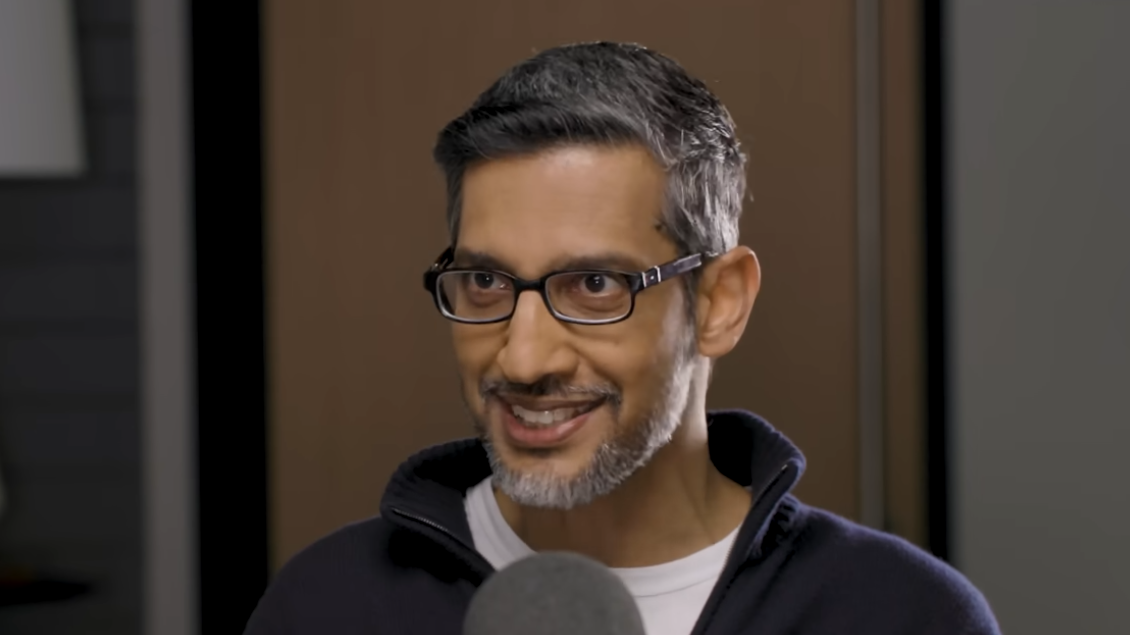

About this video
Sundar Pichai stands among the most influential CEOs of our time as leader of Google and Alphabet, masterminding its dominance in search, cloud computing, Android, and AI innovation.
AI is moving from “tools you use” to “systems that build, decide, and act”—and this shift will reshape how products are created, distributed, and monetised. For SMEs, the opportunity is not building AI infrastructure, but adapting quickly to new interfaces (agents, multi-modal content, automation) that may sit between you and your customer. The key risk: losing direct customer relationships as AI intermediaries take over discovery and transactions.
Full Video at the end of page
Core Insight (Plain English)
What is changing?
AI is entering a new phase where:
It’s no longer just capability (models), but product creation and usage at scale
More people—not just developers—can build software and services
Interfaces are shifting from apps and websites to agents, assistants, and ambient computing
Sundar Pichai frames this as a platform shift, similar to mobile or the internet—but more powerful because AI can self-improve and accelerate its own development .
Why this matters:
The way businesses:
Build products
Reach customers
Compete
…is being restructured again.
Underlying assumption being challenged:
That businesses need dedicated teams, infrastructure, and time to build digital products.
→ Now, creation itself is becoming democratised and faster.
What this means for operators
1. Product creation is becoming cheaper—but competition increases
AI tools are lowering the barrier to building apps and services (“vibe coding”), enabling more people to create products.
Implication:
Expect more competitors, including non-traditional ones
Speed of execution becomes more important than technical depth
2. AI will sit between you and your customer
The “agent-first” model suggests AI could:
Search
Compare
Decide
Transact
…on behalf of users.
Implication:
Your business may no longer interact directly with customers
You may need to optimize for AI agents, not just humans
3. Customer relationships may weaken (platform dependency risk)
If AI agents aggregate services (e.g., booking, ordering, sourcing), your brand may become a backend supplier.
Implication:
Loss of upselling, loyalty, and differentiation
Potential shift toward price-based competition
4. Content and marketing will become format-agnostic
AI enables seamless conversion between formats (text → video → audio → interactive)
IImplication:
Businesses must think multi-format by default
Static content strategies will underperform
5. Enterprise adoption will move faster than consumer
AI agents will likely scale first in enterprise environments due to:
Clear ROI
Centralized decision-making (e.g., CIOs)
Implication:
B2B SMEs may see earlier disruption (or opportunity) than B2C
6. New monetization models are still unclear
Possible models include:
Subscriptions for AI assistants
Fees for agent access
Revenue sharing between platforms and providers
Implication:
Pricing power and margins may shift unpredictably
SMEs must stay flexible on business models
Practical watchpoints
Operators should monitor:
Customer entry points
Are customers coming via search, social, or AI assistants?
Platform dependency
Are you becoming reliant on one channel (Google, TikTok, AI tools)?
Agent participation decisions
Are you integrated into AI ecosystems—or excluded?
Content performance by format
Are video, audio, or interactive formats outperforming traditional content?
Competitive landscape
Are new, smaller players entering your space using AI tools?
Summary & Reflections
This is a real platform shift, but:
The timeline is uncertain (3–5 years for meaningful impact)
Many business models (especially agent-based ones) are still unproven
Consumer behavior may evolve slower than expected
There is also tension:
Platforms claim they will drive more traffic
But individual businesses may still see declining visibility
This suggests: Growth may be happening at the system level—but unevenly distributed.
Regional Consideration (Southeast Asia)
SMEs are often platform-dependent (Shopee, Grab, TikTok)
This increases vulnerability to AI intermediaries
Trust and relationships still matter locally, which may slow full agent adoption
Who should watch the full video
SME owners (especially digital-first businesses)
Founders and product builders
Marketing and growth leads
Technology decision-makers
Decision Rating
Decision Usefulness: ★★★★☆
Provides strong directional insight on where platforms and customer interfaces are heading, helping SMEs prepare strategically.
Strategic Value: ★★★★★
Highlights a major platform shift (agents, AI intermediaries) that could redefine how businesses acquire and retain customers.
Risk Awareness: ★★★★☆
Surfaces key risks around platform dependency, disintermediation, and loss of customer ownership—critical for SME survival.
Until next time,
The SME Signal editorial Team

Contact
Questions? Reach out anytime.
hello@smesignal.com
© 2026. All rights reserved.