
From $0 to $14 BILLION - The Success Principles That Built an Empire
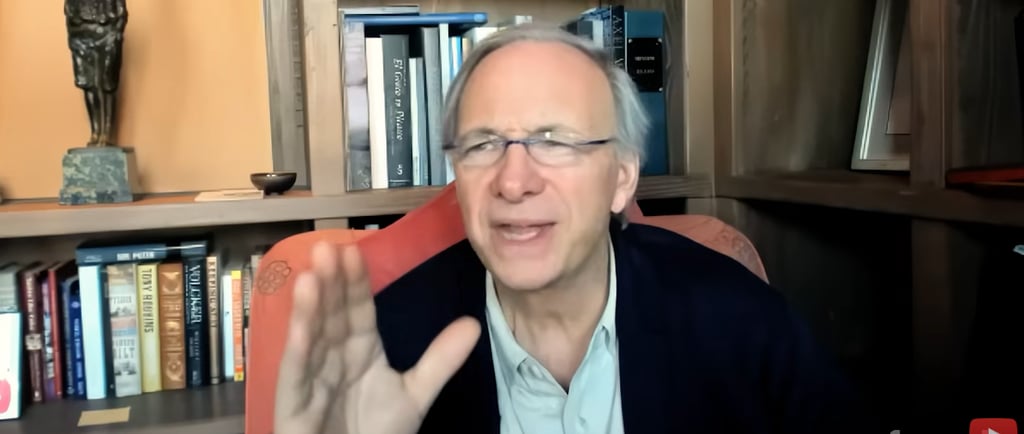
Ray Dalio built the world’s largest hedge fund by embracing radical transparency. Here, he unpacks decision-making, team dynamics, and why failure is the ultimate teacher. Speaker: Ray Dalio | Podcast: Foundr | Views as of post date: > 270,000
STRATEGY
About this video
Ray Dalio is a legendary billionaire investor and philanthropist, founder of Bridgewater Associates—the world’s largest hedge fund managing over $100 billion—which he grew from his apartment into a global powerhouse, and bestselling author of Principles: Life & Work.
Most founders don’t fail because of bad ideas — they fail because they are too attached to being right and don’t systemise learning from mistakes. The real advantage is not intelligence or hustle, but building a system where mistakes are converted into better decisions over time. If you don’t deliberately design how you learn, decide, and disagree, you will repeat the same errors until they break your business.
Full Video at the end of page
Core Insight (Plain English)
You will be wrong — often. The only question is whether you turn those mistakes into better decisions or let them compound.
Success comes from building a system:
Admit you might be wrong
Stress-test your thinking with others
Turn every mistake into a repeatable rule
If you don’t do this, your business becomes a reflection of your blind spots.
7 Practical Lessons
Stop trying to be right — build a system to get the right answer
The best decisions often don’t come from you. Build a habit of sourcing answers from the best people, not your ego.Turn every mistake into a written rule
After a bad decision, write: “Next time this happens → do X.” Over time, this becomes your operating system. In fast-moving SEA SMEs (F&B, e-commerce), this prevents repeating costly operational errors.Hire for values first, thinking ability second, skills last
Skills can be trained. Misaligned values will destroy your team. Especially relevant in small teams where one wrong hire disrupts everything.Build a “yin-yang” founding team
Visionaries usually lack detail execution. Pair them with operators who can execute. Don’t hire clones of yourself — that’s how SMEs stall.Create a culture where disagreement is normal
If your team can’t challenge you, your business is fragile. Thoughtful disagreement leads to better decisions, not conflict.Productivity is leverage, not effort
One hour with the right team can produce 50 hours of output. In SMEs, this means: stop doing everything yourself — build capable people.Struggle is not optional — learning from it is
Pain without reflection is wasted. Pain with reflection builds advantage. Many SMEs go through hardship but don’t extract lessons — that’s the real loss
Summary & Reflections
This approach is powerful but demanding. SMEs might struggle to implement this because:
It requires ego control (hard in founder-led businesses)
It slows decision-making initially (more discussion, more reflection)
Not all teams are mature enough for open disagreement
Also, over-systemising decisions can reduce speed in fast markets. The balance is critical — structure your thinking, but don’t become rigid.
Who should watch the full video
Early-stage founders building teams
SME operators scaling beyond founder-led execution
Leaders struggling with decision-making consistency
Anyone repeating the same business mistakes
Decision Rating
Decision Usefulness: ★★★★★
Highly actionable. Provides a clear framework for improving decision-making, hiring, and team structure — core issues for SMEs.
Operational Relevance: ★★★★☆
Strong relevance for day-to-day operations, especially in team management and decision processes, though harder to implement without discipline.
Execution Difficulty: ★★★★☆
Conceptually simple but difficult in practice. Requires cultural change, ego control, and consistent reflection — most SMEs will struggle to sustain it.
Until next time,
The SME Signal editorial Team

Contact
Questions? Reach out anytime.
hello@smesignal.com
© 2026. All rights reserved.