
Designing a Customer-Centric Business Model
In this Harvard Innovation Labs workshop, Michael Skok examines customer-centric business model design for startups and SMEs, focusing on how companies create, deliver, monetize, and sustain customer value through practical frameworks, case studies, and founder perspectives. Speaker: Michael Skok | Podcast: Harvard Innovation Labs | Views as of post date: 720,000
STRATEGY
About this video
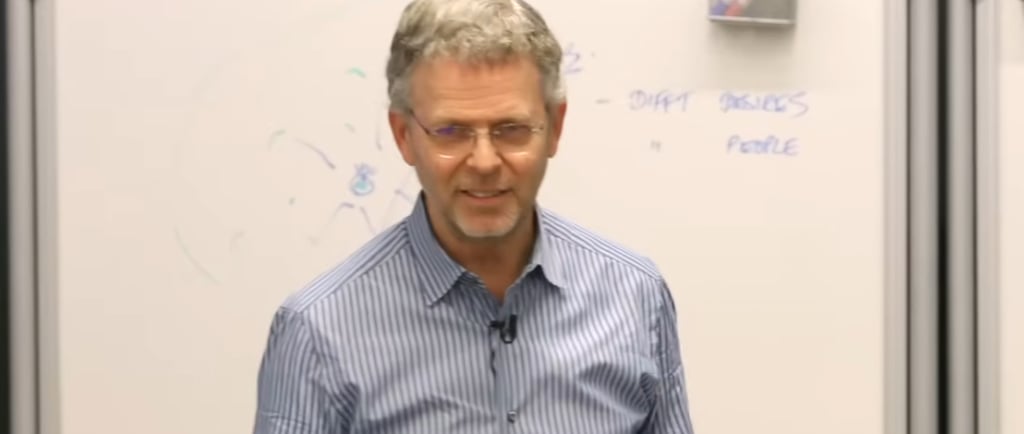
Michael Skok is a visionary serial entrepreneur and Founding Partner Emeritus at Underscore VC, who built and exited ventures like AlphaBlox (acquired by IBM), pioneered cloud and SaaS investments, and mentors founders through Harvard’s Startup Secrets series.
Most founders spend too much time thinking about their product and too little time thinking about their business model. The key lesson is that a strong business model can outperform a superior product if it delivers customer value more effectively, creates sustainable economics, and is easier to adopt.
For operators, the real question is not “What am I selling?” but “What is the core value customers are actually paying for, and how can I deliver more of it with less friction?” A business model should help customers succeed while making the business more scalable, repeatable, and defensible.
Full Video at the end of page
Core Insight (Plain English)
Customers do not buy products. They buy outcomes.
The most effective businesses identify one core customer need, build the model around delivering that need, and remove friction from adoption. The winning advantage often comes not from having the best technology, but from designing a better way to create, deliver, monetize, and sustain value.
A business model is not the product itself. It is how value reaches the customer, how money is made, and how the business survives long enough to keep delivering that value.
7 Practical Lessons
Define the core before expanding anything else.
Find the single capability customers associate with you. If customers cannot describe why you matter in one clear idea, your positioning is probably too broad.Sell the outcome, not the tool.
Customers did not want antivirus software; they wanted protection from viruses. Many SMEs still market features when they should market outcomes.Business model innovation can beat product innovation.
A weaker product with a superior delivery and monetisation model can outperform technically better competitors. The Symantec example demonstrated exactly this.Focus on one monetisation customer need first.
Trying to monetise multiple things simultaneously creates complexity and confusion. Pick the core value customers are happiest to pay for.Customer interviews are more valuable than founder assumptions.
When unsure about positioning, pricing, adoption, or delivery, ask customers directly. The framework repeatedly returns to customer validation as the decision mechanism.Reduce adoption friction aggressively.
Make solutions simple to try, easy to use, low-risk, and compatible with existing workflows. In Southeast Asia especially, where SME resources are limited, friction often kills adoption before value is proven.Build growth into the model, not just the marketing.
Updates, upgrades, up-sells, partnerships, communities, and ecosystem integrations increase customer lifetime value and reduce acquisition costs over time.
Summary & Reflections
The framework is useful because it shifts attention away from product obsession and toward customer outcomes. Many founders underestimate how much value can be created through pricing, packaging, distribution, partnerships, and ecosystem design.
However, business model innovation is not always the right first move. In some sectors—deep tech, manufacturing, industrial equipment, climate technology, healthcare—the product itself may be the primary bottleneck. A weak product cannot always be rescued by a clever business model.
The caution raised during the discussion is important: introducing a disruptive technology and a disruptive business model simultaneously may create too much change for customers to adopt comfortably. Sometimes the smarter strategy is to innovate one layer at a time.
Regional Consideration (Southeast Asia)
Distribution complexity remains a major constraint in many ASEAN markets.
Partnerships and ecosystem approaches may matter more than pure product superiority because customer acquisition costs can be high and markets remain fragmented.
Models that reduce customer education and on-boarding effort often have an advantage.
Who should watch the full video
Startup founders
SME owners
Product managers
SaaS operators
Innovation teams
Business development leaders
Anyone struggling to convert a good product into a sustainable business
Decision Rating
Decision Usefulness: ★★★★★
This is highly useful for founders because it provides a practical framework for evaluating business models, customer value, monetization, growth, and sustainability rather than focusing narrowly on product development.
Strategic Value: ★★★★★
The discussion highlights how business model design can create competitive advantage, reshape markets, and even outperform stronger products. The Symantec and Tetra Science examples make the strategic implications clear.
Practical Applicability: ★★★★☆
Most concepts can be applied immediately through customer interviews, positioning exercises, pricing decisions, and partnership strategies. Some examples are startup-oriented and may require adaptation for traditional SMEs.
Until next time,
The SME Signal editorial Team

Contact
Questions? Reach out anytime.
hello@smesignal.com
© 2026. All rights reserved.